The Wright Flyer is the airplane every pilot learns about and few of us stop to look at closely. It made four short flights in a single day, yet almost everything we do with a control yoke and rudder pedals traces back to it. Here is how the machine was built, how it was flown, and what I still take from it every time I climb into an airplane.
Four Flights on December 17, 1903
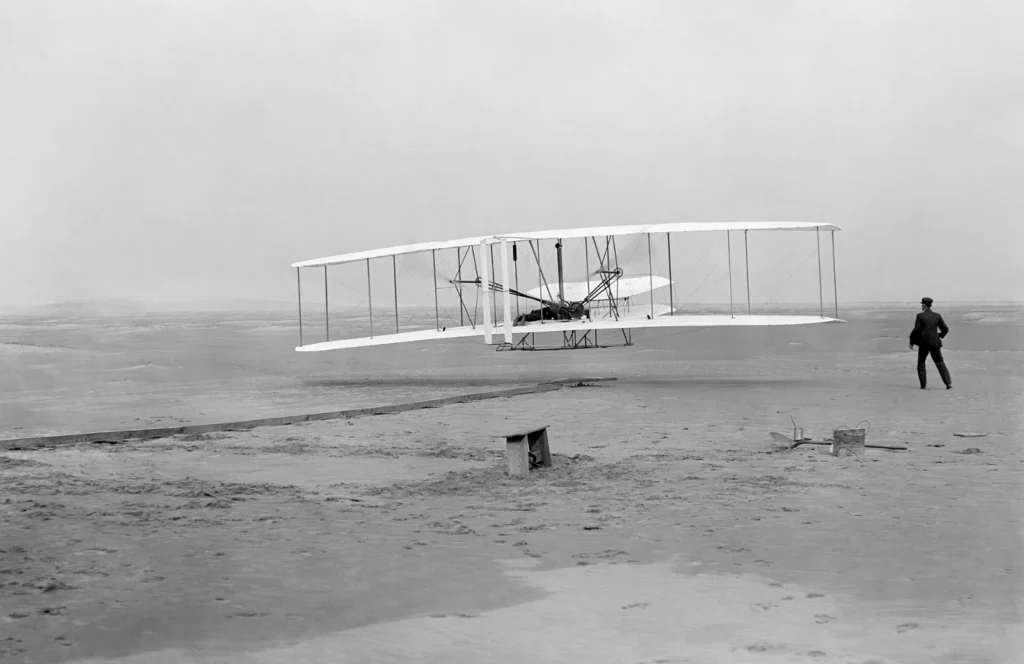
Wilbur and Orville Wright built the aircraft in Dayton, Ohio, and assembled it in the autumn of 1903 at a camp at the foot of the Kill Devil Hills, near Kitty Hawk, North Carolina. An attempt on December 14 failed. On December 17 they made four flights that covered 120, 175, 200 and 852 feet. Orville made the first, a hop of 120 feet that lasted about 12 seconds.
The Flyer is generally recognized as the first powered airplane to achieve sustained flight under the full control of its pilot. That last phrase matters. Plenty of people had gotten something into the air before. What the Wrights proved was that a pilot could steer and balance the machine once it was there.
How the Flyer Was Built
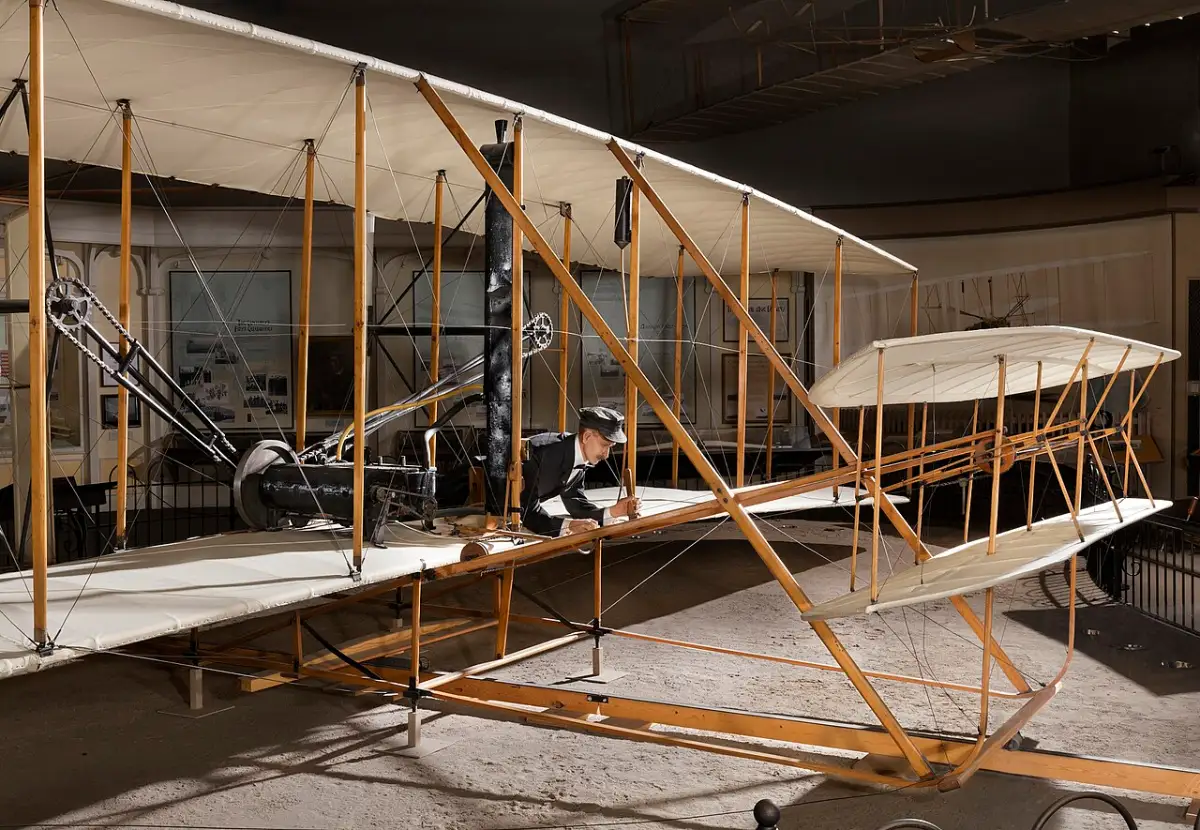
It was a biplane with a wingspan of 40 feet 4 inches, a length of 21 feet 1 inch and an empty weight of 605 pounds, according to Britannica. Instead of a tail at the back, the small horizontal surface that controlled pitch sat out in front of the wings, a layout we now call a canard. The airplane carried one person.
The Wrights were bicycle mechanics, and it shows. They found that the aeronautical tables they had been given did not match what they saw, so they built their own wind tunnel and tested wing shapes themselves. That habit of testing instead of assuming may be their most useful legacy.
The Engine and Propellers
No engine on the market suited the job, so the Wrights had one built. Charlie Taylor, a machinist at their Dayton bicycle shop, made the aluminum four-cylinder engine, which produced roughly 12 horsepower. It sat on the lower wing and drove two propellers through a chain system much like a bicycle’s. The propellers faced backward, pushing the airplane, and turned in opposite directions at an average of about 348 rpm, which helps balance the twisting force each one creates.
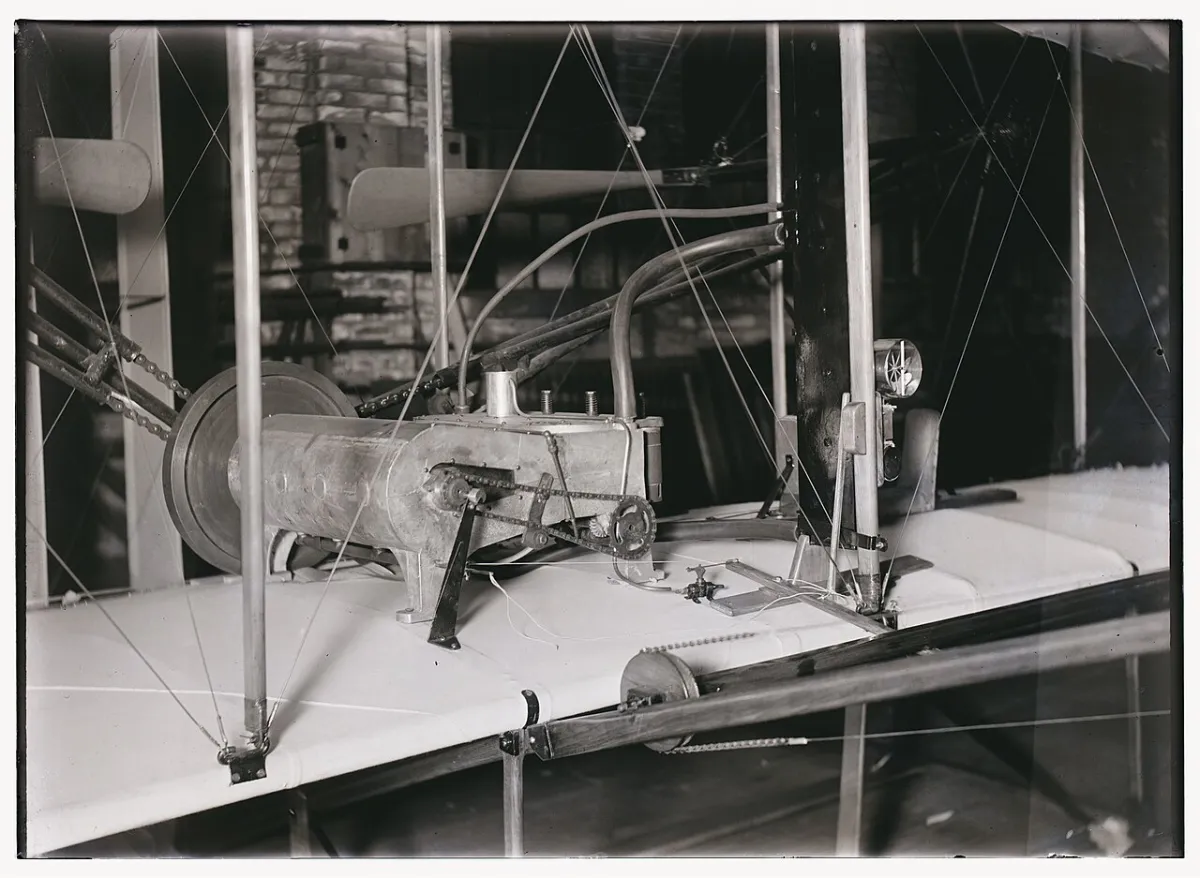
Twelve horsepower is less than a modern lawn tractor, and that is the point. The Wrights made the airplane efficient enough that a small engine could carry it.
Wing Warping: How It Was Controlled
The Flyer had no ailerons. To roll the airplane, the pilot shifted his hips, and that movement twisted the wings so the angle of attack changed on each side. This system, called wing warping, let the pilot bank into a turn much like leaning a bicycle. A small hand lever worked the front elevator for pitch, and the rudder was linked to the warping system to counter yaw.
That link solves a problem you still feel today. When one wing produces more lift to roll the airplane, it also produces more drag, which swings the nose the wrong way. Modern airplanes use ailerons instead of twisting wings, and we use our feet to coordinate turns, but the problem is the same one the Wrights tackled. My piece on secondary flight controls covers the surfaces that grew out of this work.
What Happened to the Original
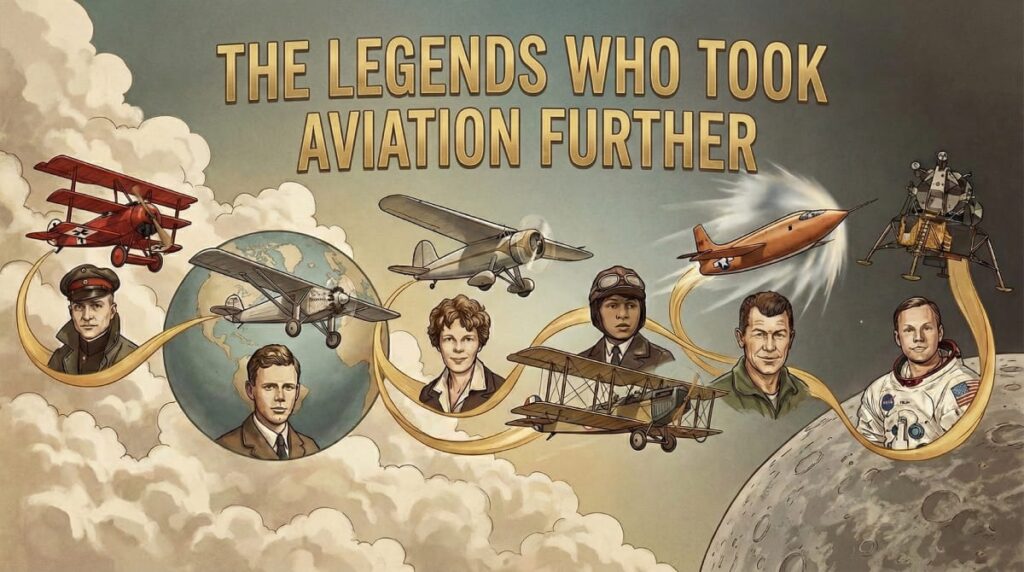
After the four flights, a gust of wind flipped the Flyer over and damaged it badly, and it never flew again. The aircraft is now displayed at the Smithsonian’s National Air and Space Museum in Washington, D.C. If you enjoy the stories behind aviation milestones, I wrote about legendary pilots who became aviation icons and the aircraft that shaped commercial aviation.
Seeing a design like this in three dimensions helps it sink in. That is where display pieces, including handcrafted aircraft models from Modelworks Direct, can bring early and modern airplanes to life on a shelf.
What Pilots Can Still Learn From the Flyer
- Control comes first. Getting off the ground was never the hard part. Staying in control was.
- Coordinate your turns. Roll and yaw are linked, so use the rudder with the ailerons.
- Test instead of assuming. The Wrights built a wind tunnel when the published numbers failed them. Work out your own margins ahead of time and write them into your personal minimums.
- Build in small steps. The four flights grew from 120 feet to 852 feet over a single day.
Bottom Line
The Wright Flyer was fragile, slow and underpowered, and it still taught us nearly everything about how an airplane has to be controlled. The numbers in this article come from Britannica and museum sources, which can differ slightly, since engine output is quoted at anywhere from 12 to 12.5 horsepower. For exact figures, check the Smithsonian’s records before you quote them.