Every pilot’s home has a shelf, a desk, or a corner of a study that tells the story of their flying career more honestly than any CV or logbook total. Not the certificates — those go on the wall in frames, where they are meant to be seen. The things on the shelf are different. They were not placed there for visitors. They accumulated there because putting them anywhere else would have felt wrong — like filing something you need to be able to reach quickly. A pair of headsets that have logged more hours than most GA aircraft. A battered approach plate from an airport that no longer exists. A scale model of the first aircraft the pilot ever flew, still in the livery of the school that closed the year after they went solo.
The objects that pilots keep are not decorations. They are a private archive — a record of the flights, the transitions, the milestones, and the aircraft that shaped the relationship with flying that defines, for most serious pilots, a significant part of who they are. Understanding what those objects are, and why they stay, is understanding something genuine about pilot culture that the logbook alone cannot capture.
The Logbook: A Record That Pilots Never Discard
The pilot logbook is the most universal of all keeping objects — the one thing that virtually every pilot retains across every career transition, aircraft type change, and life stage. Logbooks accumulate rather than replace each other. A pilot with thirty years of flying may carry four or five volumes, each representing a specific chapter of their career — the PPL training pages, the CPL hours, the first years on type, the turbine transition. The handwriting changes across volumes. The aircraft types change. The airports become progressively more remote or more significant depending on which direction the career went. The logbook is the only document that records all of it sequentially, in the pilot’s own hand, without editorial intervention.
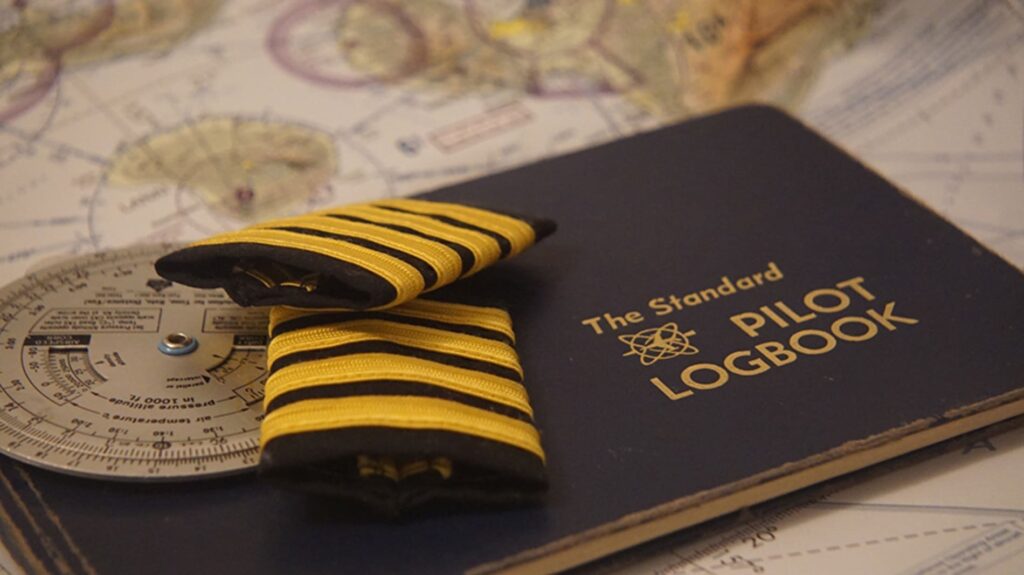
Pilots who have lost logbooks — to fire, flood, or simple misplacement in a move — describe the experience with a specificity of loss that reveals how much of their flying identity is stored in those pages. The hours are recoverable through records. The specific entries — the weather notation on a first solo cross-country, the name of the examiner on the CPL check, the endorsement for the first night currency flight — are not. The logbook is irreplaceable in the way that photographs are irreplaceable: not for the information it contains but for the specific texture of the record.
The Headset: The Most Personal Piece of Equipment in Aviation
A pilot’s headset occupies a category of ownership that no other piece of aviation equipment quite matches. It is worn for every flight. It carries the acoustic memory of every ATC exchange, every engine sound at rotation, every moment of silence at altitude that defines the experience of flight for pilots who have been doing it long enough to have an acoustic memory of the cockpit at all. The headset that a pilot has flown with for a decade has been shaped, literally, by their head — the ear cups compressed to a specific fit, the headband adjusted to a precise tension, the microphone boom bent to the position that has never needed changing.
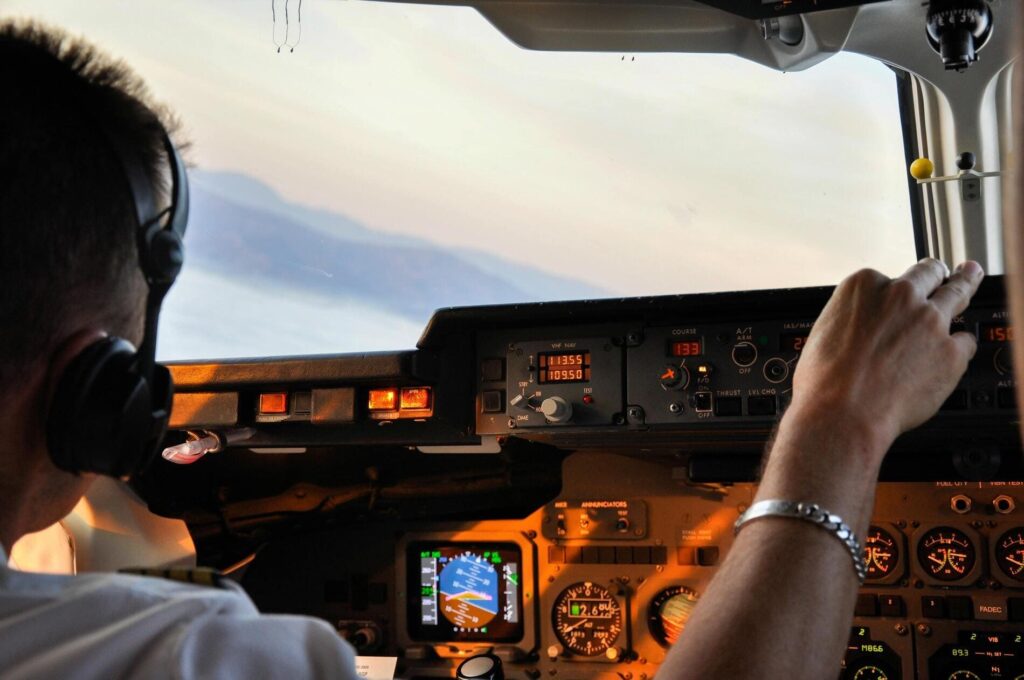
Pilots retire headsets reluctantly and often not completely. A Bose A20 or David Clark H10-13.4 that has logged thousands of hours tends to move from the flight bag to the shelf rather than to the bin — kept as a record of a flying period in the same way that the logbook from that period is kept. The technology improves. The replacement is objectively better. The original stays, because discarding it would feel like discarding the flights it was worn for.
The Scale Model: A Permanent Record of the Aircraft That Mattered Most
The airplane model on a pilot’s shelf is never generic. It is always a specific aircraft — the type they trained on, flew their first charter in, or spent the most significant years of their career operating. The commercial captain who spent fifteen years on the Boeing 737-800 and has a 1:200 replica of their final aircraft in their airline’s current livery on their desk is not displaying aviation enthusiasm in the abstract. They are keeping a specific record — of a specific machine, from a specific period, that defined a specific chapter of their professional life.
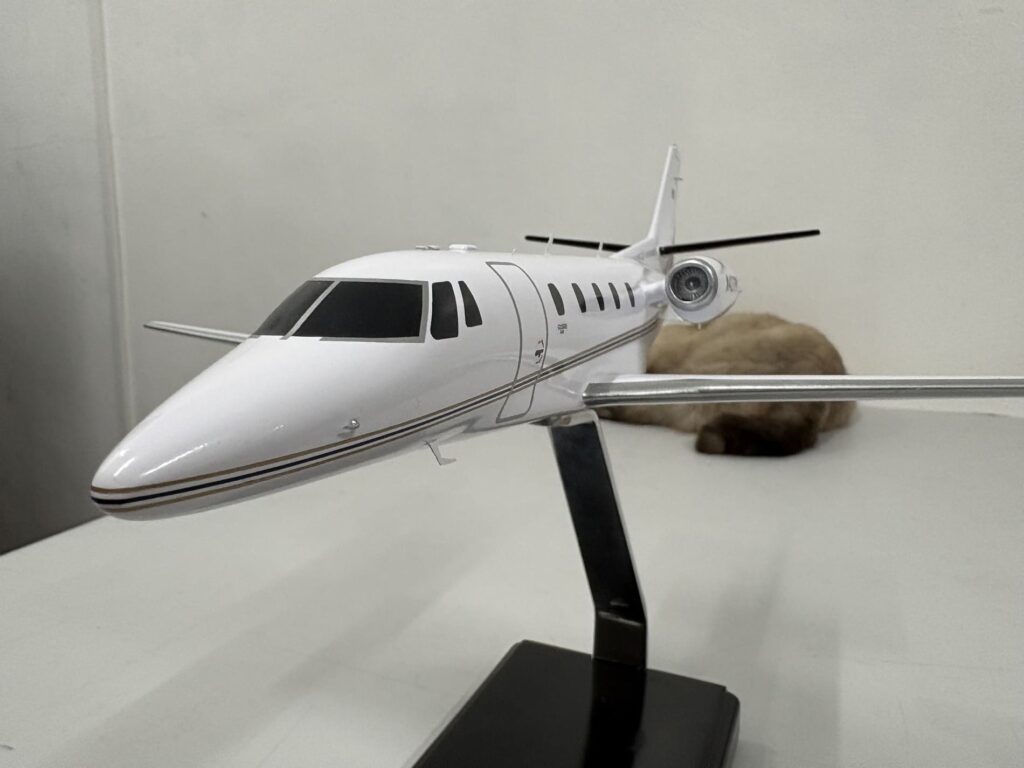
The most meaningful pilot shelf models are the commissioned ones — custom aircraft replicas built to reproduce a specific tail number in a specific livery at a specific period of the aircraft’s service life. The Cessna 172 in the training school’s colours from the year the pilot went solo. The ATR-72 in the regional carrier’s original scheme before the rebrand. The DC-9 that a veteran captain flew for twenty years before the type was retired. These are not available from any production catalogue. They exist because someone understood that the aircraft was worth preserving in permanent form — and commissioned the piece that preserves it.
The Car on the Shelf: What Pilots Keep Beyond Aviation
The pilot shelf is not exclusively aviation. Almost every pilot who has accumulated a significant flying career has also accumulated a significant relationship with at least one car — the vehicle that carried them to and from airfields across the years they were building hours, the car they bought when the first airline contract came through, the machine that has been as constant in their ground life as flying has been in their professional one. That car tends to be represented on the shelf in the same way the primary aircraft is represented: in scale, in its correct colours, chosen because it marked something.
A pilot who has an airplane model of their primary type alongside a model car of the vehicle they drove for the decade they were building their career is not mixing categories. They are displaying a biography — the two machines that defined the period in which their identity as someone who moves through the world with purpose was most clearly established. The aircraft and the car know each other on that shelf. They are from the same chapter of the same story.
The objects pilots keep are not souvenirs. They are the physical record of a relationship with flight that no logbook total, no certificate, and no hours count can fully express. They are what staying looks like.
The Retirement Question: What Happens to the Shelf When the Flying Stops?
The most revealing moment in a pilot’s relationship with their shelf objects comes at retirement. The headsets, the charts, the logbooks, the scale models — everything that accumulated across a career is suddenly no longer associated with an active flying life. It is associated with a flying life. The distinction matters. Objects that were practical or biographical during an active career become purely biographical at retirement — and the question of what to do with them is the question of how seriously the pilot takes that biography.
The pilots who commission a scale replica of their final aircraft at retirement — the specific type, the specific tail number, the specific livery of the final sector — are answering that question with a clarity that most retirement gifts cannot match. They are choosing to keep the record of their flying life in permanent form, displayed with the same seriousness the career deserved. The commissioned model is not a retirement gift in the conventional sense. It is a statement of intent: that the flying life was worth preserving, and that the objects that carry its memory are worth keeping with the care they deserve.
Frequently Asked Questions
What scale model do most pilots choose to represent their career aircraft?
Commercial pilots most commonly choose 1:200 or 1:400 scale for airliner subjects — scales that produce manageable display pieces with accurate livery reproduction. GA and general aviation pilots typically prefer 1:48 or 1:32 for their training and personal aircraft, where the smaller airframe dimensions still allow meaningful surface detail. Commissioned custom aircraft replicas are available at any scale — the choice is typically determined by the intended display space and the level of detail the pilot wants to be legible at arm’s length.
What is the best gift for a retiring pilot?
A commissioned scale replica of the specific aircraft the retiring pilot flew most — in the correct tail number, livery, and configuration of their peak career period — is consistently the most personally meaningful retirement gift in the aviation category. It is specific, permanent, and impossible to choose without genuine knowledge of the recipient’s flying career. A quality airplane model of this kind does not merely commemorate a career. It preserves it in three-dimensional form on a shelf where the retired pilot will see it every day — which is the most a retirement gift can do.
Why do pilots keep objects from their flying careers?
Because a flying career is not simply a professional history — it is an identity. The aircraft types, the routes, the airports, the transitions between aircraft and operators: these form a continuous narrative that most pilots carry as a central part of their self-understanding. The objects associated with that narrative — logbooks, headsets, scale models, charts — are kept because discarding them would mean discarding part of the record of who the pilot became through flying. The shelf is not sentiment. It is the physical expression of a professional and personal identity that flying built.
What Stays
The career ends. The currency lapses. The medicals stop. The type ratings expire and are not renewed. The logbook closes on a final entry that reads like every other entry — date, aircraft type, route, hours — but carries a weight that no previous entry did. And the shelf stays exactly as it was. The headset. The model of the first aircraft. The car that drove to a thousand pre-dawn briefings. The logbooks in a row.
These are what staying looks like. Not a monument to a career that is over. A record of one that was worth having — and worth keeping, carefully, on a shelf where it can be seen every day by the person who lived it.