
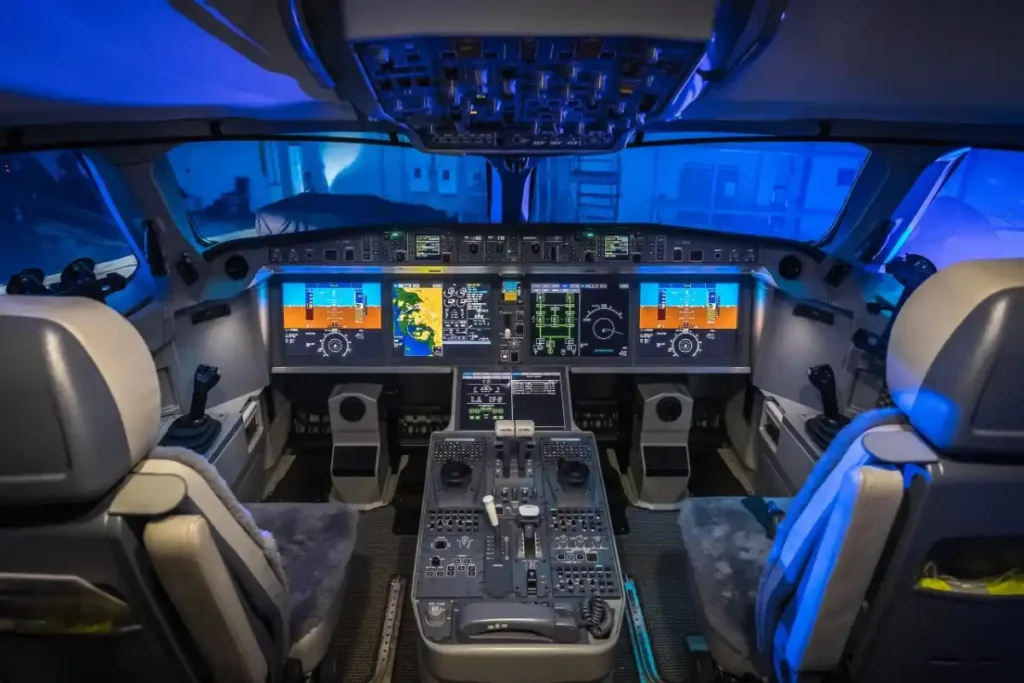
The cockpit has always been the nerve center of any aircraft, but the way it looks and functions is undergoing a quiet revolution. Future cockpit design is no longer just about adding more screens or shrinking switches into digital menus. It is about rethinking how humans and machines share responsibility during flight. Engineers are asking a deeper question: how can a workspace reduce mental fatigue while increasing situational awareness? The answer lies in blending simplified visual layouts with intelligent automation that adapts to the pilot rather than forcing the pilot to adapt to it. As commercial and private aviation both push toward greater efficiency, the cockpit is becoming less cluttered, more intuitive, and increasingly personalized. This shift reflects a broader trend across transportation industries where human factors research now drives engineering decisions from the very first sketch, rather than being added as an afterthought once hardware is finalized.
Why the Traditional Cockpit Is Being Rethought
For decades, cockpits accumulated dials, switches, and gauges as new systems were bolted onto aircraft. This resulted in dense panels that demanded years of training just to locate the right control under pressure. Modern flight operations now involve far more data than a human brain can process instinctively, from weather patterns to fuel optimization to air traffic coordination. Future cockpit design addresses this overload by consolidating information into layered digital interfaces that only reveal complexity when it matters. Instead of forty separate instruments competing for attention, a single adaptive screen can prioritize what the pilot needs in that specific moment of flight. This approach mirrors how modern cars replaced dozens of buttons with touchscreens, though aviation requires far stricter safety validation. The goal is not to remove pilot control but to remove unnecessary friction between intention and action, so decisions happen faster and with less second-guessing during critical phases like takeoff or landing.
Core Elements Shaping the Next Generation
Several technologies are converging to define what tomorrow’s flight deck will look like. Voice-activated systems, gesture recognition, and biometric monitoring are moving from concept demonstrations into real prototypes. Future cockpit design increasingly treats the pilot’s physical and cognitive state as data worth tracking, not just the aircraft’s mechanical status. Sensors embedded in seats or headsets can detect fatigue signals such as slower reaction times or irregular breathing patterns, prompting the system to simplify tasks or alert crew members accordingly. Meanwhile, augmented reality overlays project flight paths, terrain warnings, and runway alignment directly onto the pilot’s field of view, reducing the need to glance between windows and instruments. These innovations do not work in isolation; they form an integrated ecosystem where each component reinforces the others to create a calmer, more responsive environment for high-stakes decision-making.
Key elements driving this transformation include:
- Adaptive touchscreens that reorganize based on flight phase
- Voice command systems for hands-free operation
- Augmented reality head-up displays for real-time overlays
- Biometric sensors monitoring pilot alertness and stress levels
- Predictive AI that flags anomalies before they escalate
The Role of Artificial Intelligence in the Flight Deck
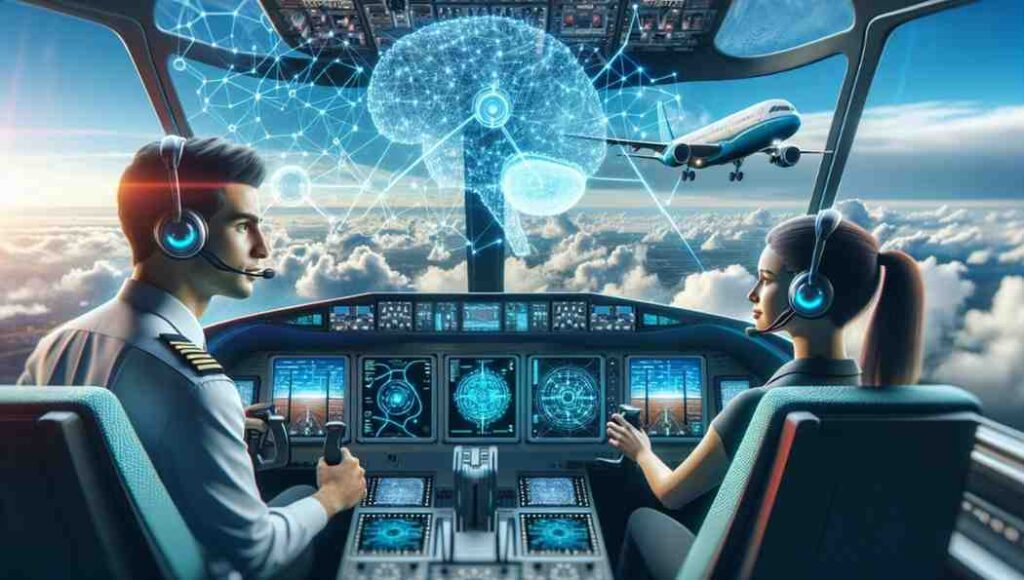
Artificial intelligence is arguably the most transformative force behind future cockpit design. Rather than replacing pilots, AI systems are being built as collaborative partners that handle routine monitoring so humans can focus on judgment calls. Predictive algorithms can now analyze engine performance trends and flag irregularities long before a warning light would traditionally appear. This shift from reactive to proactive maintenance awareness changes how crews approach in-flight decision-making entirely. Natural language processing also allows pilots to query systems conversationally, asking about fuel reserves or weather deviations without navigating multiple submenus. Some experimental designs even include AI co-pilot interfaces that can take over specific subsystems during emergencies, freeing human attention for higher-priority tasks. Critics rightly point out that over-reliance on automation has caused past incidents, so designers are careful to keep AI transparent and overridable, ensuring the human remains firmly in command at every stage of the flight.
Human-Centered Ergonomics and Comfort
Beyond digital intelligence, physical comfort remains central to how engineers approach the modern flight deck. Long-haul pilots spend many consecutive hours in a seated position, and poor ergonomics contribute directly to fatigue and reduced alertness. Future cockpit design incorporates adjustable seating geometry, better lumbar support, and reduced glare from ambient lighting to minimize physical strain over long routes. Climate control zones tailored to individual pilot preference, rather than a single cabin-wide setting, are also being tested in newer prototypes. Lighting itself has become a design discipline of its own, with circadian-friendly LED systems that shift color temperature to help regulate alertness during overnight flights. These seemingly small details compound over a multi-hour journey, and airlines are beginning to recognize that comfort is not a luxury feature but a genuine safety investment. A well-rested, physically comfortable pilot makes sharper decisions, especially during the demanding final approach and landing sequence.
Data Visualization and Decision Support
One of the most visible changes in the modern flight deck is how information gets displayed. Instead of raw numerical readouts, future cockpit design favors visual storytelling through color-coded graphics, trend arrows, and simplified iconography that convey meaning at a glance. A pilot scanning a screen for two seconds should immediately understand whether a system is normal, cautionary, or critical without parsing text. Synthetic vision systems now recreate terrain and obstacles in three dimensions even in zero visibility conditions, giving crews a consistent picture regardless of weather. Decision support tools go a step further by suggesting optimal actions, such as alternate routing around turbulence, while still leaving final authority with the human crew. This visual-first philosophy reduces cognitive load significantly compared to older text-heavy displays, and it also shortens training time for new pilots who can build mental models faster through intuitive graphics rather than memorizing abstract numeric thresholds across dozens of separate instruments.
Comparing Traditional and Future Cockpit Approaches
The contrast between legacy systems and emerging concepts highlights just how far aviation interface design has progressed. The table below outlines some defining differences.
| Aspect | Traditional Cockpit | Future Cockpit Design |
|---|---|---|
| Instrument Layout | Fixed analog dials and switches | Adaptive digital screens |
| Pilot Monitoring | Manual self-assessment | Biometric fatigue tracking |
| Information Display | Raw numeric data | Visual, color-coded graphics |
| Automation Role | Limited autopilot functions | AI-assisted predictive support |
| Communication | Manual radio and checklists | Voice-activated, conversational systems |
| Environmental Comfort | Standard fixed settings | Personalized lighting and climate zones |
This comparison shows a clear pattern: modern engineering is shifting from static, one-size-fits-all systems toward flexible environments that respond to real-time conditions and individual pilot needs.
Challenges Facing Widespread Adoption
Despite the promise, several obstacles stand in the way of rapid implementation. Certification processes for aviation technology are famously rigorous, often taking years longer than consumer electronics development cycles. Regulators must verify that new interfaces do not introduce unfamiliar failure modes, especially when AI-driven suggestions are involved. Future cockpit design also faces resistance from training institutions, since retraining an entire generation of pilots on unfamiliar interfaces carries real financial and logistical weight for airlines. Cybersecurity is another growing concern, as more connected systems mean more potential entry points for malicious interference. Cost remains a practical barrier too, particularly for smaller regional carriers that cannot easily justify expensive cockpit overhauls. Manufacturers are addressing these hurdles through incremental rollouts, introducing new features gradually within existing certified frameworks rather than replacing entire systems overnight, which allows both regulators and pilots time to build trust in the new technology.
What This Means for Passengers and the Industry
While passengers rarely see the cockpit, the improvements happening there ripple outward into overall flight safety and efficiency. Better pilot alertness monitoring reduces the risk of human error during long-haul operations. Predictive maintenance insights mean fewer unexpected mechanical delays and cancellations. Airlines benefit financially too, since optimized fuel routing suggested by AI decision support tools can meaningfully lower operating costs across large fleets. Future cockpit design also supports sustainability goals by helping pilots fly more fuel-efficient profiles based on real-time atmospheric data rather than static flight plans. For the broader aviation industry, this evolution represents a strategic advantage, as airlines that adopt these systems early may see measurable improvements in on-time performance and reduced training costs over the coming decade. Passengers ultimately experience the results indirectly, through smoother, safer, and more predictable journeys shaped by decisions made long before boarding even begins.
Looking Toward the Next Decade
The trajectory of cockpit innovation suggests an environment that feels less like a control panel and more like a collaborative partner. Future cockpit design will likely continue blurring the line between human intuition and machine precision, with each generation of aircraft introducing subtler, smarter interfaces. Concepts like fully digital twin simulations, where ground teams monitor a live virtual replica of the aircraft’s systems, are already influencing how engineers plan future upgrades. As electric and hybrid aircraft enter commercial service, cockpit requirements will shift again to accommodate entirely new power management displays. What remains constant throughout this evolution is the core principle guiding every redesign: technology should serve the pilot’s judgment, not replace it. The cockpit of tomorrow will not simply look different from today’s; it will think alongside the people who fly it, adapting in real time to keep every journey safer, calmer, and more efficient than the one before.