

Few airlines in India’s aviation history have grown as quickly as Akasa Air. Launched in August 2022 by a team of former airline executives, including Vinay Dube, the carrier entered a market already dominated by established players. Yet within just a few years, Akasa Air has carved out a distinct identity built on affordability, reliability, and a youthful brand image. Backed in its early days by veteran investor Rakesh Jhunjhunwala, the airline set out with a clear mission: make air travel accessible to a much wider section of Indian travelers, particularly those in smaller cities who had limited flying options before. That founding vision continues to shape every decision the airline makes today, from route selection to fleet strategy.
A Fleet Built Around Simplicity
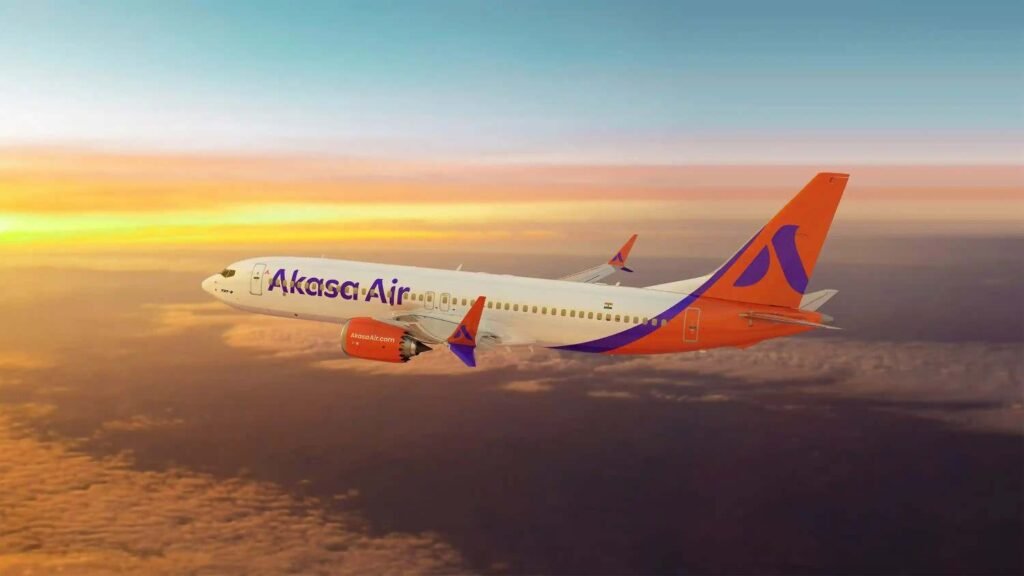
One of the smartest decisions made early on was choosing to operate a single aircraft family. Akasa Air flies an all-Boeing 737 MAX fleet, a choice that simplifies pilot training, reduces maintenance complexity, and keeps operational costs predictable. By mid-2026, the airline had crossed the 40-aircraft mark, having inducted nine new jets in that year alone, with several more scheduled before year-end. This rapid induction pace reflects growing confidence in India’s aviation demand and Akasa Air’s own ability to scale efficiently. The airline’s total order book with Boeing now stands at 226 aircraft, a number that signals long-term ambition rather than short-term opportunism. Fleet uniformity also means that as Akasa Air adds capacity, it doesn’t need to juggle multiple maintenance systems or retrain crews across different aircraft types, which keeps turnaround times tight and operating costs in check.
Domestic Network: Connecting Bharat’s Growing Cities
Akasa Air’s domestic strategy has always leaned toward connecting not just metro cities but also emerging Tier-2 and Tier-3 towns. This approach taps into India’s rising disposable incomes and growing appetite for air travel outside the traditional metro corridors. As of 2026, the airline serves close to 30 domestic destinations, with frequencies increasing steadily on high-demand routes such as Mumbai-Bengaluru, Delhi-Chennai, and Bengaluru-Kolkata. The airline has also worked to strengthen secondary city connectivity, giving travelers in smaller towns direct access to major business and leisure hubs without unnecessary layovers.
Some notable aspects of Akasa Air’s domestic growth include:
- Consistent addition of new routes each quarter based on demand data
- A strong presence in southern India, particularly Bengaluru and Chennai
- Growing frequency on business-heavy corridors to capture corporate travelers
- Expansion into underserved Tier-2 markets to boost regional connectivity
This blend of metro dominance and regional reach has allowed Akasa Air to compete effectively even as older carriers dominate legacy slots at major airports.
International Ambitions Take Shape
While domestic growth remains the backbone of Akasa Air’s operations, the airline has been steadily building its international footprint since 2023. It currently serves six international destinations, with a strong concentration in the Gulf region, including Abu Dhabi, Doha, Jeddah, Kuwait City, and Riyadh. This focus makes sense given the massive Indian expatriate population across the Gulf Cooperation Council countries, many of whom rely on affordable, direct flights to stay connected with family back home. Akasa Air’s leadership has publicly stated plans to double daily flights to GCC destinations, viewing the region as a cornerstone of its international expansion rather than a one-off market.
Beyond the Gulf, the airline has expressed interest in extending its reach further, with discussions around new routes to East African destinations such as Kenya, Ethiopia, and Egypt. There has also been talk of exploring Central Asian markets like Kazakhstan and Uzbekistan, regions that remain largely untapped by Indian budget carriers. If these plans materialize, Akasa Air could become one of the more geographically diverse low-cost airlines operating out of India, moving beyond the well-trodden Gulf and Southeast Asia routes that most competitors focus on.
Summer 2026 Schedule: A Major Capacity Boost
Akasa Air’s Summer 2026 schedule marked a turning point in its growth trajectory. The airline announced a 22% year-on-year increase in departures alongside a 37% rise in Available Seat Kilometres, a key industry metric used to measure passenger-carrying capacity. This expansion wasn’t just about adding more flights; it involved a deliberate strategy to increase frequencies on already popular routes while simultaneously testing new city pairs. The Gulf region received particular attention, with increased frequencies to Jeddah, Abu Dhabi, and Riyadh reflecting sustained demand from business travelers, expatriates, and leisure tourists alike.
This kind of aggressive scheduling requires careful coordination between fleet availability, crew rostering, and airport slot allocation, all of which Akasa Air appears to be managing reasonably well given its continued on-time performance metrics, which have remained competitive within the Indian aviation sector.
Comparing Akasa Air’s Growth Milestones
| Metric | 2022 (Launch) | 2024 | 2026 |
|---|---|---|---|
| Fleet Size | 2 aircraft | 22 aircraft | 40+ aircraft |
| Domestic Destinations | 5 cities | 18 destinations | ~28 destinations |
| International Destinations | 0 | 5 | 6 |
| Boeing Order Book | Initial order | 226 jets confirmed | 226 jets (ongoing deliveries) |
| Market Share (Domestic) | Negligible | ~4% | Growing steadily |
This table highlights just how far Akasa Air has come in a relatively short span. Few airlines globally have managed to scale their fleet twentyfold within four years of launch, and Akasa Air’s ability to do so while maintaining cost discipline speaks to the strength of its operating model.
Pilot Hiring and Operational Scaling
Growth of this magnitude requires more than just aircraft; it demands a steady pipeline of trained crew. Akasa Air has set a timeline to resume pilot hiring in 2026, with an initial focus on recruiting first officers. This staffing strategy is designed to align with the airline’s expanding fleet and route network, ensuring that operational capacity doesn’t outpace the availability of qualified crew. Given that pilot shortages have affected several airlines globally in recent years, Akasa Air’s proactive approach to hiring reflects lessons learned from the industry’s broader staffing challenges. The airline has also invested in training infrastructure to reduce dependency on external pilot pools, a move that should pay dividends as fleet numbers continue climbing toward the 50-aircraft mark and beyond.
What Sets Akasa Air Apart from Competitors
India’s low-cost airline segment is fiercely competitive, with established players holding significant market share. Yet Akasa Air has managed to differentiate itself in a few meaningful ways. First, its younger fleet means fewer maintenance-related delays compared to some legacy competitors operating older aircraft. Second, the airline has cultivated a reputation for customer-friendly policies, including flexible rebooking options and a relatively modern digital booking experience. Third, its brand positioning appeals strongly to younger, tech-savvy travelers who value convenience and value-for-money over legacy prestige.
That said, Akasa Air still faces real challenges. Boeing’s production constraints have occasionally slowed aircraft deliveries industry-wide, and any disruption to the 737 MAX supply chain could directly affect Akasa Air’s expansion timeline given its single-fleet-type strategy. Additionally, as the airline pushes further into international markets, it will need to navigate complex bilateral air service agreements and compete against well-established Gulf carriers on routes where brand loyalty already runs deep.
Why the Akasa Air Story Matters for Indian Aviation
Beyond its own commercial success, Akasa Air’s growth trajectory says something important about the broader Indian aviation market. The country continues to see rising passenger volumes driven by economic growth, increasing urbanization, and greater disposable income among middle-class households. Airlines that can scale quickly while keeping fares competitive stand to benefit enormously from this structural demand growth. Akasa Air’s rapid fleet induction, calculated route expansion, and steady march toward international markets all position it as a case study in how a new entrant can carve out meaningful market share in a crowded industry, provided execution remains disciplined and capital deployment stays efficient.
Conclusion
Akasa Air’s journey from a two-aircraft startup in 2022 to a 40-plus aircraft carrier by 2026 illustrates what focused execution can achieve in a demanding industry like aviation. By committing to a single aircraft type, prioritizing underserved domestic markets, and steadily building international connectivity through the Gulf and beyond, Akasa Air has positioned itself as one of the more compelling growth stories in Indian aviation. Challenges around aircraft delivery timelines, pilot staffing, and international competition remain real, but the airline’s track record so far suggests a management team capable of navigating them. As Akasa Air continues expanding its network and fleet through 2026 and beyond, it seems well placed to remain one of the defining names in India’s evolving low-cost aviation landscape, offering travelers a genuinely competitive alternative in an increasingly dynamic market.